
Most people delay getting legal help because the process feels unclear. What actually happens in that first meeting? What do you bring? What does it cost? The legal consultation process explained simply is this: a structured meeting where you share your situation, a lawyer evaluates it, and you both decide on next steps. No mystery. No obligation. Understanding each phase before you walk in gives you more control and less anxiety. This guide walks you through every stage, from preparation to what comes after, so you know exactly what to expect from legal consultation.
Table of Contents
- Key takeaways
- How to prepare for your legal consultation
- What to expect during a legal consultation
- Understanding fees, retainers, and communication
- What happens after the consultation
- My honest take on consulting a lawyer
- Start your legal journey with Justicebridgetechnologies
- FAQ
Key takeaways
| Point | Details |
|---|---|
| Prepare documents in advance | Bring organized, chronological records to help your lawyer assess your situation quickly. |
| Privilege starts at first meeting | Attorney-client privilege applies from your first consultation, even if you don't hire the lawyer. |
| Fee terms must be in writing | Hourly, contingency, and hybrid fee models should be confirmed in a written retainer before work begins. |
| Intake may not involve the attorney | Trained paralegals or coordinators often handle initial screening before your attorney meeting. |
| Next steps depend on your decision | After consultation, you choose whether to retain counsel and how to proceed. |
How to prepare for your legal consultation
Good preparation turns a 45-minute meeting into real progress. Many people show up with a rough memory of events and hope for the best. That approach costs time and money.
Start with your documents. Gather everything that relates to your situation:
- Contracts, leases, or agreements relevant to the issue
- Emails, text messages, or written correspondence
- Police reports, medical records, or inspection reports
- Photos, videos, or physical evidence
- Prior legal documents or court notices
Once you have the documents, organize facts chronologically. A written timeline is more useful than a verbal summary. It lets your lawyer spot gaps, identify key dates, and assess how strong your position may be. Think of it as building the foundation for everything that follows.
You also need to come with questions. Before the meeting, write down what you want to know. Strong questions to consider include:
- What legal issues does my situation involve?
- What are my realistic options?
- What are the risks of each option?
- Who handles my case after I retain you?
- What does this typically cost and how long does it take?
Pro Tip: Write your questions in priority order. If time runs short, you will have covered what matters most to you.
One more thing: set realistic expectations going in. Lawyers cannot guarantee outcomes, but they can give you an honest picture of what is controllable and what is not. Going in with that mindset prevents frustration later.
What to expect during a legal consultation
The meeting itself tends to follow a predictable structure. Knowing that structure reduces the feeling that you are walking into the unknown.
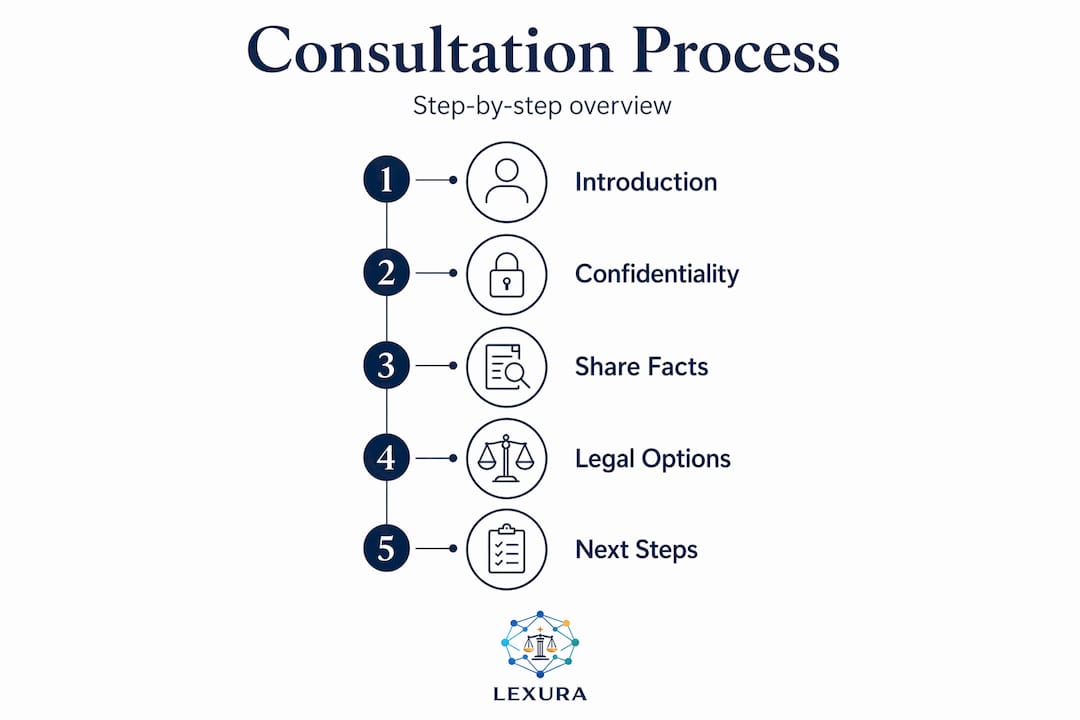
Most consultations begin with introductions and a brief overview of confidentiality. Your lawyer will explain that what you share stays protected. From there, you will describe your situation. The lawyer listens, asks clarifying questions, and starts building a picture of the legal issues involved.

Consultation is a two-way process: you provide the facts and your goals, and the lawyer assesses the legal options and risks. This is not just fact-finding. A well-run consultation includes a risk-benefit analysis and a review of case viability, which sets the direction for everything that follows if you choose to proceed.
Confidentiality versus attorney-client privilege
These two concepts are related but not the same. Understanding the difference protects you.
Legal confidentiality is an ethical duty that all lawyers owe their clients. It covers nearly all information related to your case and is enforced through bar disciplinary rules. Attorney-client privilege is a legal protection. It prevents your lawyer from being forced to disclose your communications in court or other legal proceedings.
The key point: privilege applies from the first consultation, even if you never formally retain the attorney. That means you can speak candidly at your very first meeting without worrying that your words will be used against you.
"Privilege protects honest feedback and legal strategy from the very first meeting, even if no attorney-client relationship is ever formed."
There is one serious risk you need to know about. Clients often waive privilege accidentally by sharing privileged communications with outside parties. Forwarding your lawyer's email to a friend, posting legal advice on social media, or describing confidential conversations to someone not covered by the privilege can destroy that protection entirely. Once waived, it generally cannot be restored.
Keep your legal communications private. Do not share documents your lawyer sends you. Do not discuss the details of your consultation publicly.
Understanding fees, retainers, and communication
One of the biggest sources of client dissatisfaction is fee confusion. This is avoidable. The legal advice process overview includes a financial component that deserves the same attention as the legal substance.
Here are the most common fee structures you will encounter:
- Hourly rate: You pay for the attorney's time in set increments, often billed in tenths of an hour. This is common in family law, business disputes, and real estate matters.
- Contingency fee: The attorney takes a percentage of your recovery if you win. No win means no fee. This is standard in personal injury and certain employment cases.
- Flat fee: A single fixed amount for a defined scope of work, often used for straightforward matters like drafting a will or handling an uncontested divorce.
- Hybrid arrangements: A combination of the above, such as a reduced hourly rate plus a smaller contingency percentage. These are more flexible but require careful review.
Fee arrangements must be agreed on in writing before formal representation begins. The retainer agreement is that written record. Read it carefully. It should specify the scope of work, how fees are calculated, how costs like filing fees and expert witnesses are handled, and how you can terminate the relationship if needed.
Pro Tip: Ask your lawyer to walk you through the retainer agreement section by section during the consultation. Any attorney who resists doing this is a concern.
Beyond fees, ask about communication. How often will you receive updates? Who is your primary contact? Clear communication protocols reduce anxiety and set a productive tone for the relationship. Clients who proactively ask about cost, timeline, and expected outcomes tend to feel more confident throughout the representation.
Also consider tax-related legal matters. If your issue involves financial or tax implications, you may find it useful to understand why consulting matters in specialized areas like tax disputes, where the steps in legal consultation carry specific procedural requirements.
What happens after the consultation
The consultation gives you information. What you do with it is your decision. There is no pressure to retain that attorney or any attorney. Take time to review what you learned.
If you decide to move forward with the lawyer, here is what the next phase typically looks like:
- Signing the retainer agreement: This formally starts the relationship and defines the scope.
- Case intake and conflict check: Intake is often handled by trained paralegals or coordinators who screen for conflicts of interest and gather additional information before the attorney dives in.
- Document collection: Your lawyer's team will request additional records, evidence, and information to build your file.
- Legal strategy development: Once the facts are organized, your attorney will outline the approach. This may include pre-litigation negotiation, a demand letter, formal filing, or a combination.
Here is a quick comparison of common post-consultation paths:
| Path | When it applies | General timeline |
|---|---|---|
| Negotiated settlement | Disputes with a clear dollar value | Weeks to several months |
| Formal litigation | When settlement is not possible | Months to years |
| Administrative complaint | Employment, housing, licensing issues | Varies by agency |
| No further action | Situation does not warrant legal remedy | Immediate |
Throughout any of these paths, your role is to stay responsive and organized. Delays in providing documents or approvals slow everything down. Communication quality during this phase directly affects how smoothly your matter progresses. Keep copies of everything and document your interactions with your legal team.
My honest take on consulting a lawyer
I have seen a lot of people go into their first legal consultation without preparation and come out more confused than when they started. That is not the lawyer's fault. It is a prep problem.
The most common mistake I observe is treating the consultation like a conversation rather than a meeting with a purpose. You have a limited amount of time with a professional whose attention is genuinely valuable. Showing up with a clear timeline, organized documents, and specific questions changes the entire dynamic.
There is also a mindset issue that I think does real damage. Many people walk in hoping the lawyer will validate their frustration and confirm they have a strong case. Sometimes that happens. Often, an honest attorney will point out weaknesses you had not considered. That is not a bad consultation. That is exactly what you paid for.
Read your retainer agreement before you sign it. I cannot stress this enough. Many clients sign without reading and are later surprised by billing practices or scope limitations that were clearly described in the document. You do not need a legal degree to understand the key terms. Ask questions until you do understand.
My strongest piece of advice: stay proactive. Check in regularly, respond quickly to requests, and maintain realistic expectations about timelines. Legal matters rarely move as fast as clients want. The clients who stay engaged and informed almost always have a better experience, regardless of the outcome.
— Ayomikun
Start your legal journey with Justicebridgetechnologies
If you are not quite ready to book a consultation but want to get organized first, Justicebridgetechnologies can help you take that first step without pressure or cost.

Justicebridgetechnologies offers free legal education through its Lexura platform, where you can answer guided intake questions, understand the legal topics in your situation, and get clear on your rights before speaking with anyone. No attorney-client relationship forms unless you choose to move forward. When you are ready, you can find licensed attorneys near you directly through the platform. If you want to start by understanding your situation on your own terms, begin your free legal overview today. No fees. No obligation. Just clarity.
FAQ
What is the legal consultation process?
The legal consultation process is a structured meeting between you and a licensed attorney where you share your facts, ask questions, and receive an overview of your legal options. It is informational and does not obligate you to hire the lawyer.
Does attorney-client privilege apply at the first consultation?
Yes. Privilege protects your communications from the very first meeting, even if you do not retain the attorney afterward.
What documents should I bring to a legal consultation?
Bring contracts, correspondence, reports, photos, and any prior legal documents relevant to your situation. Organizing them in chronological order helps your lawyer assess your case more efficiently.
How do legal fees work after a consultation?
Fee structures vary and may include hourly rates, contingency arrangements, or flat fees. All terms should be confirmed in a written retainer agreement before any work formally begins.
Can I consult a lawyer for free?
Some attorneys offer free initial consultations, particularly in personal injury or employment cases. Platforms like Justicebridgetechnologies also provide free legal education and guided intake so you can understand your situation before committing to paid representation.