
You have a legal question, but the thought of calling a lawyer feels like signing your life away. That fear is common, and it keeps a lot of people from getting help they genuinely need. The good news: you can consult attorney without commitment in most practice areas, and doing so costs you nothing but an hour of your time. This guide walks you through exactly what to prepare, what to expect, and how to protect yourself throughout the process so you walk away informed, not pressured.
Table of Contents
- Key takeaways
- What you need before consulting an attorney without commitment
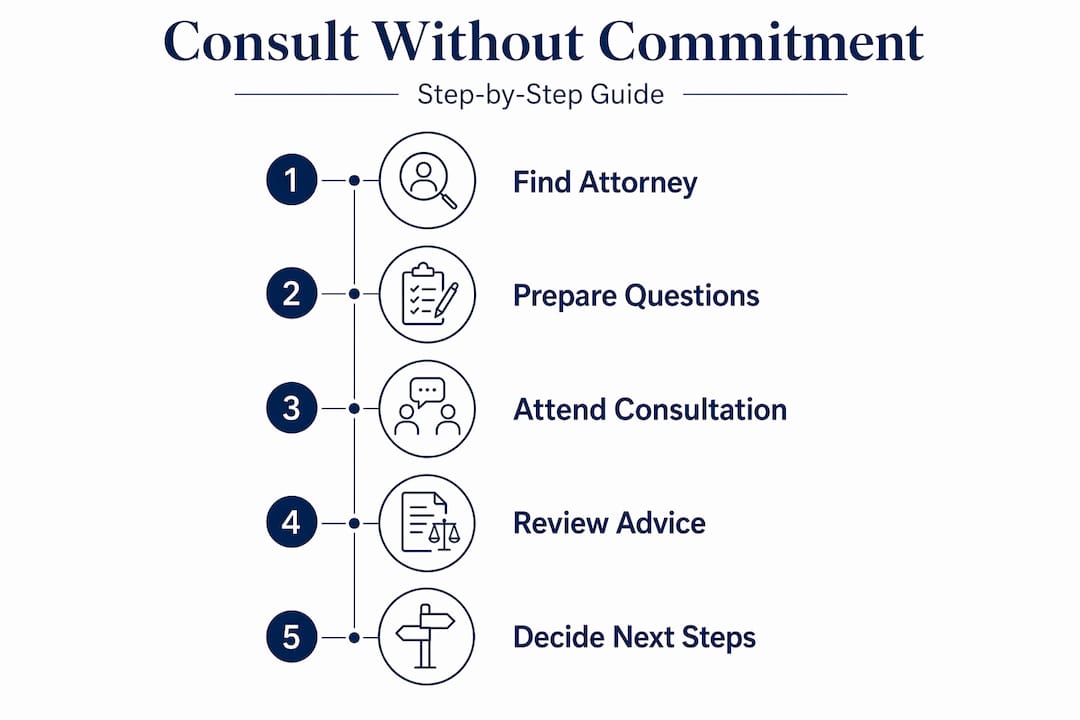
- How to consult an attorney without commitment, step by step
- Common pitfalls when consulting attorneys without obligation
- What to expect after your no-commitment consultation
- My honest take on no-obligation consultations
- How Justicebridgetechnologies helps you prepare
- FAQ
Key takeaways
| Point | Details |
|---|---|
| No commitment required | Most attorneys offer free initial consultations with no obligation to hire them afterward. |
| Your information stays private | Attorney-client privilege applies from the first conversation, even if you never retain the lawyer. |
| Prepare before you go | Bring a timeline of events and key documents to help the attorney assess your situation faster. |
| Watch for red flags | High-pressure tactics or vague fee structures after a "free" meeting are signs to walk away. |
| You have options after | A consultation can lead to self-advocacy, a referral, or a formal engagement on your terms. |
What you need before consulting an attorney without commitment
Preparation is what separates a useful consultation from a confusing one. Attorneys can only assess your situation based on what you share, and a disorganized story costs you time. A chronological event summary and key documents help attorneys evaluate your case far faster than a verbal account alone.
Here is what to gather before your meeting:
- Relevant documents: Contracts, lease agreements, medical records, police reports, letters, or any written notices connected to your situation
- A simple timeline: A one-page summary of dates and key events, written in plain language
- Correspondence: Emails, texts, or letters exchanged with the other party
- Your questions: Write them down in advance so you do not forget under pressure
It also helps to understand three terms that often get confused:
| Term | What it means |
|---|---|
| Initial consultation | A first meeting to assess your situation and explore options. No commitment. |
| Legal advice | Guidance specific to your facts and circumstances, given by a licensed attorney. |
| Attorney-client relationship | A formal agreement where the attorney represents you. This requires a signed retainer. |
Knowing the difference matters. A free consultation gives you information. It does not create a formal legal relationship unless you both agree to move forward.
Pro Tip: State bar associations and legal aid phone clinics regularly offer free brief advice sessions focused on family law, housing, wills, and other civil matters. Search your state bar's website for upcoming events or hotlines before paying for a consultation.
You can also find attorneys who offer free or low-cost consultations through legal aid organizations, law school clinics, and bar-sponsored Law Day events. These are legitimate, structured resources staffed by licensed attorneys.
How to consult an attorney without commitment, step by step
Once you are prepared, the process itself is straightforward. Here is how it typically works:
-
Search for attorneys in your practice area. Use your state bar's referral service, a legal aid directory, or a lawyer search tool to find attorneys who handle your type of issue. Many personal injury and civil attorneys offer free consultations lasting 30 to 60 minutes.
-
Call or submit a contact form. Most firms ask for a brief description of your situation upfront. Keep it short. You are not giving your full story yet. You are just confirming they handle your type of case.
-
Confirm the consultation is free and no-obligation. Ask directly before you schedule: "Is there any fee for this consultation, and am I under any obligation to retain your firm afterward?" A reputable attorney will say yes to both without hesitation.
-
Attend the meeting. Bring your documents and your written questions. The attorney will typically ask you to describe the situation, then ask clarifying questions. The meeting focuses on whether your situation has legal merit and what your options are, not on resolving the issue entirely.
-
Ask your questions. A free consultation is as much your chance to evaluate the attorney as it is their chance to evaluate your case. Ask about their experience, their fee structure, and what they would recommend as a next step.
-
Leave without pressure. You are not required to decide anything in the room. Thank them for their time, take your documents, and think it over.
One thing many people do not realize: attorney-client privilege attaches from the very first conversation. What you share during a consultation is confidential, even if you never hire that attorney. You can speak honestly without fear that your information will be used against you.
Pro Tip: If you are nervous about sharing too much, it is perfectly acceptable to give a general overview first and add details only after you feel comfortable. The attorney's job in this meeting is to listen and assess, not to interrogate.
Common pitfalls when consulting attorneys without obligation
Knowing what can go wrong helps you avoid it. These are the most common mistakes people make when seeking no-obligation attorney advice.
-
Over-sharing before you are ready. You do not need to tell the attorney everything in the first five minutes. Give the overview, see how they respond, and share more as trust builds.
-
Expecting a resolution. Many people walk into a consultation expecting answers and walk out feeling let down. The reality is that initial consultations assess case viability, not resolve the full issue. The attorney is determining whether your situation meets the threshold for legal action, not solving it on the spot.
-
Ignoring who you are actually speaking with. Firm intake processes often involve paralegals or intake staff before a licensed attorney reviews your case. If you want to speak directly with an attorney, say so upfront. There is nothing wrong with asking, "Will I be meeting with an attorney or a member of the support staff?"
-
Missing fee ambiguity. While most consultations are free, paid consultations typically run $100 to $300. If a firm is unclear about costs before you arrive, that is a warning sign. Get it in writing or via email confirmation.
-
Accepting high-pressure tactics. If an attorney pushes you to sign a retainer agreement during the consultation or implies you will lose your case without committing immediately, that is a red flag worth taking seriously.
A consultation is a conversation, not a contract. Any attorney who treats it otherwise is not prioritizing your interests.
If a consultation feels off, trust that instinct. You can seek a second opinion from another attorney. Nothing about a free, no-obligation meeting locks you in.
What to expect after your no-commitment consultation
Most consultations end with one of three outcomes. Understanding them in advance removes the uncertainty.

| Outcome | What it means for you |
|---|---|
| No further action needed | The attorney confirms your situation does not require legal intervention, or you decide to handle it yourself. |
| Referral to another attorney | Your issue falls outside their practice area, and they point you to someone better suited. |
| Engagement offer | The attorney proposes to represent you, outlines fees, and presents a retainer agreement for your review. |
None of these outcomes obligate you to do anything. An engagement offer is just that: an offer. You can take it home, review it, and decide later.
If you do decide to move forward, ask about fee structures clearly. Some attorneys work on contingency (meaning they only get paid if you win), while others charge hourly or flat fees. Ask for a written fee agreement before signing anything.
Pro Tip: If you want a second opinion after your consultation, that is completely normal and often smart. Bring the same documents to a second attorney and compare their assessments. You are not being disloyal. You are being thorough.
You can also use what you learned in the consultation to advocate for yourself. Understanding your rights, even without hiring an attorney, puts you in a stronger position when dealing with the other party, an insurance company, or a landlord.
My honest take on no-obligation consultations
I have seen a lot of people put off getting legal help because they assumed the first call would trap them into something. That fear is understandable, but it costs people real opportunities.
What I have learned is that the hesitation usually comes from not knowing what to expect. Once people understand that a consultation is just a conversation, and that their information is protected from the moment they speak, the anxiety drops significantly. They walk in nervous and walk out with a clearer picture of where they stand.
The misconception I see most often is that consulting a lawyer means you are escalating a situation. It does not. In many cases, a single conversation reveals that no legal action is needed at all. That is valuable information. It saves time, money, and stress.
My honest advice: go to the consultation with your documents, your questions, and zero pressure on yourself to decide anything. Treat it like a fact-finding meeting. You are gathering information. The attorney is not your boss. They work for you, if and when you choose.
Client autonomy matters. Your comfort matters. A good attorney will respect both.
— Ayomikun
How Justicebridgetechnologies helps you prepare

Justicebridgetechnologies built Lexura specifically for moments like this. Before you ever speak to an attorney, Lexura walks you through guided intake questions that help you organize your situation, understand the legal topics involved, and identify what kind of help you actually need. It is always free, and no attorney-client relationship is formed unless you actively choose to move forward.
When you are ready to find an attorney, Lexura's lawyer search tool connects you with bar-licensed attorneys near you, including those who offer free or limited consultations. You stay in control of every step. For organizations looking to provide their communities with legal education resources, Lexura offers dedicated solutions that make access to legal information easier for everyone.
FAQ
What does it mean to consult an attorney without commitment?
It means meeting with a licensed attorney to discuss your legal situation without any obligation to hire them. You leave the meeting free to decide your next step on your own terms.
Is what I share during a free consultation confidential?
Yes. Attorney-client privilege protects everything you share during an initial consultation, even if you never retain the attorney. Your information cannot be disclosed without your consent.
How long does a no-obligation consultation typically last?
Most free consultations run 30 to 60 minutes, depending on the complexity of your situation and the attorney's availability.
Can I get free legal advice without going to a law firm?
Yes. State bar associations, legal aid organizations, and phone-based legal clinics regularly offer free brief advice on civil matters like family law, housing, and wills, with no ongoing commitment required.
What should I do if the consultation does not feel right?
Walk away. A no-obligation consultation means exactly that. Seek a second opinion from another attorney and use what you learned to continue making informed decisions on your own timeline.